
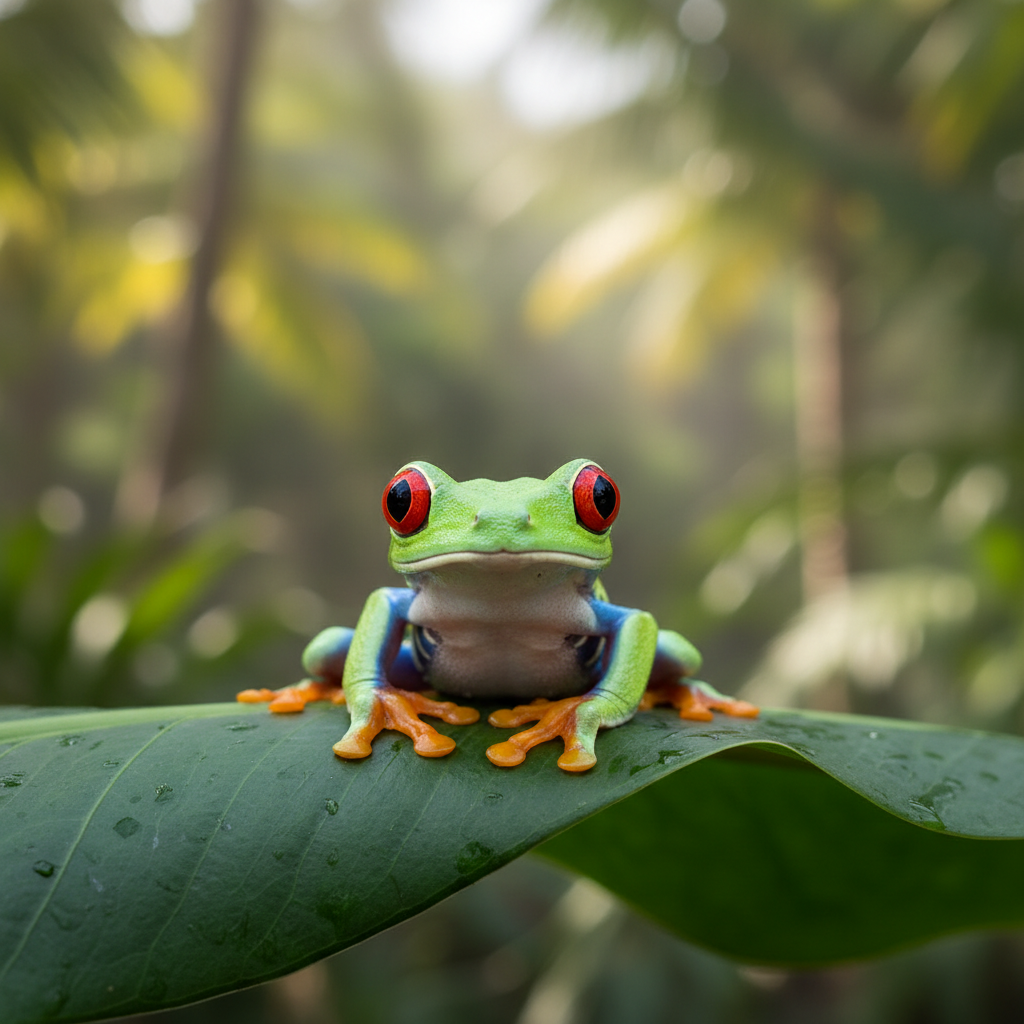
Image: Red-eyed tree frog care starts with understanding their natural rainforest habitat – a stunning amphibian perfect for dedicated hobbyists.
There’s something almost magical about watching a red-eyed tree frog for the first time. Picture this: a tiny creature no bigger than your thumb, draped in luminous green like a jewel stolen from a tropical forest, with oversized crimson eyes that seem to hold centuries of wisdom behind those ruby-red curtains. It’s the kind of animal that makes you believe in fairy tales, the kind of creature that reminds us nature is the greatest artist who ever lived.
This comprehensive red-eyed tree frog care guide covers everything you need to know—from habitat setup to diet requirements, temperature needs, and where to find captive-bred specimens.
What is Red-Eyed Tree Frog Care?
I still remember the first time I saw one in person. My breath caught. It was sitting so still on a broad leaf, those enormous red eyes blinking up at me with what I swear was curiosity. In that moment, I understood why these tiny amphibians have captured human fascination for generations. They’re not just beautiful—they’re alive with a presence that defies their diminutive size.
Red-eyed tree frog care (Agalychnis callidryas) requires dedication, but these exotic amphibians reward committed keepers with years of wonder. Native to the rainforests of Central America, these frogs have become increasingly popular among hobbyists willing to meet their specific care requirements.
Masters of Disguise: Red-Eyed Tree Frog Defense Mechanisms
Don’t let those striking red eyes fool you into thinking red-eyed tree frogs are fragile. These little survivors have evolved one of the most brilliant defensive strategies in the entire animal kingdom. When a predator approaches, the frog sleeps peacefully with its brilliant colors hidden, legs tucked beneath its body. But the moment danger strikes? It snaps open those bright red eyes, flashes its vivid orange feet and blue-and-yellow sides, and leaps away in a burst of color that startles predators long enough for escape.
Scientists call this startle coloration, and it’s absolutely mesmerizing to witness. The frog essentially uses its own body as a fireworks show, momentarily blinding predators with its sudden burst of impossible colors.
Natural Habitat: Red-Eyed Tree Frog Rainforest Life
In the wild, red-eyed tree frogs inhabit the rainforests of Central America, from southern Mexico through Panama. They’re primarily nocturnal creatures, spending their days snoozing beneath broad leaves or in the curly stems of bromeliads. As night falls, they become hunters, creeping through the canopy on silent missions to find their next meal.
Understanding the natural habitat is crucial for proper red-eyed tree frog care because these frogs thrive when their enclosure mimics their rainforest home.
Red-Eyed Tree Frog Diet and Feeding Guide
The red-eyed tree frog diet consists mainly of crickets, flies, moths, and occasionally smaller frogs in the wild. They’re patient predators, waiting motionless until prey comes within striking distance before launching that long, sticky tongue with remarkable accuracy.
In captivity, red-eyed tree frog diet requirements are relatively straightforward. These insectivorous amphibians thrive on a variety of appropriately sized prey:
- Gut-loaded crickets (primary staple)
- Dubia roaches (excellent protein source)
- Flightless fruit flies (great for juveniles)
- Moths and waxworms (occasional treats)
Pro feeding tip: Always gut-load insects 24 hours before feeding to maximize nutritional value. Dust prey with calcium powder 2-3 times per week, and use a multivitamin supplement weekly.
Red-Eyed Tree Frog Habitat Setup Guide
The terrarium setup is perhaps the most critical aspect of red-eyed tree frog care. These are exotic animals with specific needs, and they deserve keepers who understand the commitment. But for those willing to invest the time and resources, these frogs offer rewards that go far beyond their beauty.
Terrarium Requirements for Red-Eyed Tree Frog Care
The terrarium should replicate their natural rainforest home as closely as possible:
| Parameter | Ideal Range |
|---|---|
| Temperature (Day) | 75-85°F |
| Temperature (Night) | 65-75°F |
| Humidity | 60-80% |
| Minimum Tank Size | 20 gallon tall (for 1-2 frogs) |
Key Red-Eyed Tree Frog Habitat Elements
- Vertical space is essential — These arboreal frogs love to climb and will use every inch of vertical space you provide
- Live or artificial plants with broad leaves for perching and hiding spots
- Moss and substrate to maintain humidity
- Small water dish for soaking (shallow, as they can drown in deep water)
- Proper ventilation to prevent stagnation
Where to Buy Red-Eyed Tree Frogs
Important: Only purchase captive-bred red-eyed tree frogs from reputable breeders. Never take animals from the wild. Our fascination with these creatures should never become a threat to their survival in the forests where they belong.
According to the Amphibian Conservation Alliance, responsible captive breeding programs help reduce pressure on wild populations while providing healthy specimens for the hobby.
Look for breeders who:
- Can provide health guarantees
- Have clean, ethical breeding practices
- Offer post-purchase support
- Can document captive breeding history
Conservation & Red-Eyed Tree Frog Responsibility
The pet trade can be a force for conservation when done right, funding breeding programs and raising awareness about rainforest preservation. The World Wildlife Fund reports that habitat loss threatens numerous amphibian species, making responsible ownership crucial for species survival.
Beyond their beauty, red-eyed tree frogs serve as indicators of rainforest health. Their presence—or absence—tells scientists about the state of the ecosystems they call home.
Is Red-Eyed Tree Frog Care Right for You?
If you’re drawn to their beauty, if you find yourself staying up late watching videos of them blinking those crimson eyes, if you feel that pull of fascination—that’s your answer. But ask yourself honestly:
- Can you commit to proper housing and humidity control?
- Can you afford an appropriate setup (typically $200-500 initial investment)?
- Are you prepared for a lifespan of 5-10 years?
- Can you find a qualified exotic veterinarian in your area?
For more exotic pet guidance, check out our related care guides for Ball Python care and Axolotl care.
Red-Eyed Tree Frog Care FAQ
Are red-eyed tree frogs good pets for beginners?
Red-eyed tree frogs are not recommended for complete beginners due to their specific humidity and temperature requirements. However, dedicated hobbyists can successfully keep them with proper research.
How long do red-eyed tree frogs live?
With proper care, red-eyed tree frogs typically live 5-10 years in captivity.
What does red-eyed tree frog care cost?
Initial setup costs typically range from $200-500, with ongoing monthly costs of $20-40 for food and utilities.
Do red-eyed tree frogs need a heater?
Yes, most homes need a low-wattage heat source to maintain the 75-85°F range during the day.
Can I handle a red-eyed tree frog?
Handling should be minimal. Their permeable skin is sensitive to oils and chemicals on human hands. When necessary, use wet gloves.