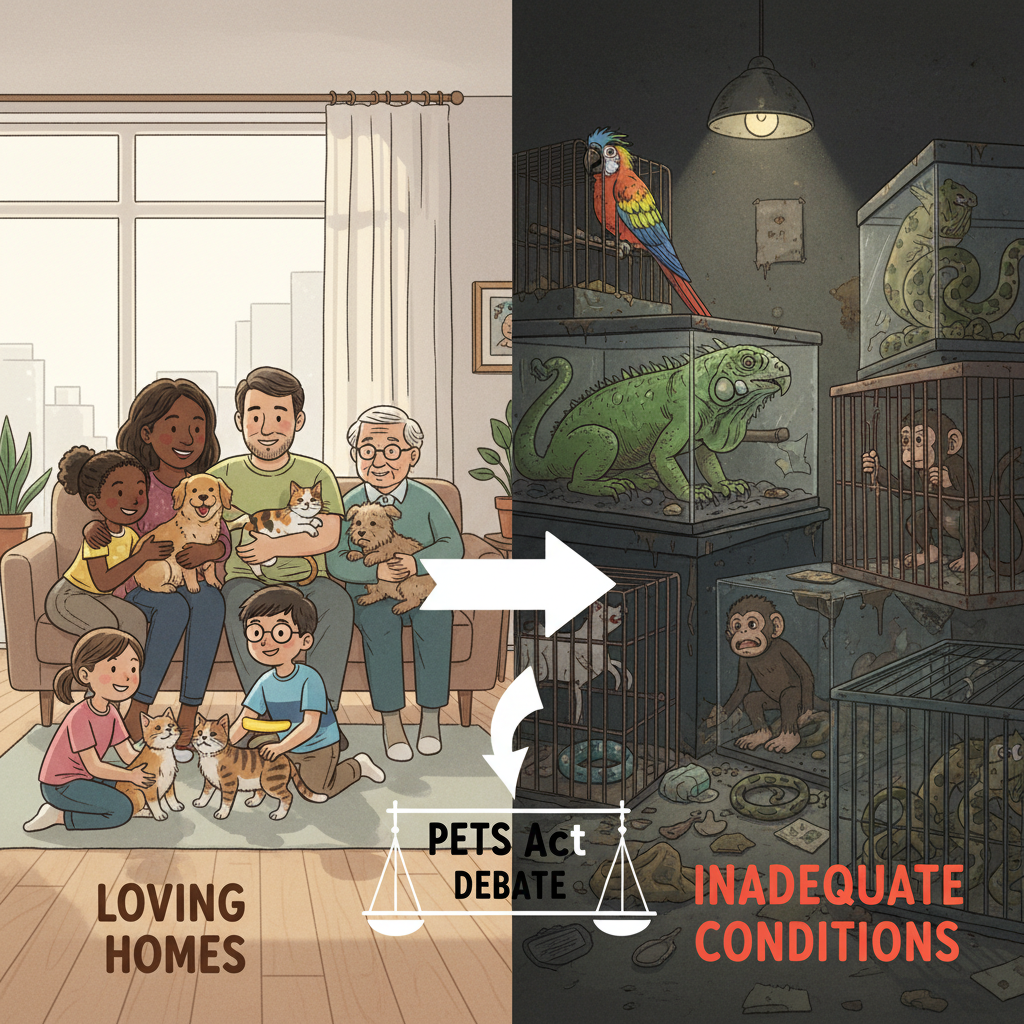
The Pets Act…There’s a story animal welfare advocates love to tell. A state bans commercial puppy sales. Pet stores pivot to shelter partnerships. Puppy mills lose their retail outlet. Families find rescue animals. Progress is made.
That story isn’t wrong—but it’s dangerously incomplete. Massachusetts deserves the full, unfiltered truth before replicating California’s controversial experiment. Because when you pull on this thread, the picture gets considerably darker for a much wider range of animals—including vulnerable reptiles, birds, amphibians, and tropical species that shelter networks are wholly unequipped to handle.
What Is the PETS Act? Understanding the Proposed Legislation
The PETS Act—officially “An Act Promoting Pet Equity, Treatment and Safety”—has genuine merits. Pet shops selling dogs and cats from commercial breeding operations often prioritize profit over animal welfare. The shelter partnership model where stores become adoption venues is measurably better than alternative retail channels.
The housing provisions are genuinely important. Breed-based insurance discrimination and housing bans have forced families to surrender beloved animals for reasons unrelated to behavior. Fixing that is overdue.
But none of this is the wholesale transformation supporters claim—and the problems multiply when examining exotic animals.
California’s Warning: Six Years of Data Nobody Wants to Discuss
Here’s what advocates don’t emphasize: California’s pet shop ban was not a clean success. It was a complicated, frequently disturbing mess that exposed deep structural weaknesses.
The Pipeline Didn’t Close—It Went Underground
When California shut down pet store sales in 2019, the breeding industry adapted instantly. Online marketplaces exploded to fill the vacuum. By 2024, a Los Angeles Times investigation found truckloads of puppies being shipped into California from the same breeding operations the ban was supposed to eliminate.
You shut down the pet store. The broker network picked up the phone. The consumer went online. The puppy mill kept breeding.
The Hidden Casualties: Exotic and Tropical Pets at Risk
This is where the conversation gets genuinely uncomfortable. The Massachusetts PETS Act covers dogs and cats only—but the dynamics that failed so badly for dogs in California are already affecting reptiles, amphibians, and tropical species.
The Scale Is Vast
Americans keep tens of millions of exotic animals as companion animals. Ball pythons, bearded dragons, leopard geckos, axolotls, parrots, and dozens of tropical species form the backbone of a retail trade that dwarfs most people’s awareness.
Unlike dogs and cats, these animals have extraordinary diversity of needs—species-specific temperature requirements, specialized diets, UVB lighting, and enclosure dimensions that cannot be generalized.
What Happens When Retail Channels Close for Exotic Animals?
The central problem nobody wants to address: exotic species most need regulated retail channels—which retail bans would eliminate.
Expert Guidance Disappears
Reputable exotic pet stores provide critical initial husbandry education: care sheets, habitat guidance, and follow-up support. Closing those channels eliminates the one point where knowledgeable staff might prevent an animal ending up in an inappropriate home.
Wild-Caught Species Get Laundered
The exotic pet trade is linked to wildlife trafficking in ways the dog trade isn’t. Ball pythons, macaws, and tropical amphibians are captured from the wild, laundered through captive breeding operations, and sold into the legal trade. When retail stores close, animals flow into rescue networks far less equipped to screen for origin or welfare.
Shelters Cannot Handle Exotic Animals
The PETS Act’s shelter mechanism works reasonably for dogs and cats. It is completely unworkable for the majority of exotic species.
Shelters lack the expertise, enclosures, environmental controls, or dietary infrastructure. A ball python surrendered to a general shelter will typically die within days. A cockatoo with behavioral issues requires specialist avian rescue. Sending these animals to general shelters is not welfare improvement—it’s often a death sentence.
The Domino Effect: How “Dogs and Cats” Becomes Everything
The PETS Act covers dogs and cats—but that’s almost certainly temporary.
Animal welfare advocacy follows a well-documented trajectory: start with sympathetic animals, build a template, extend it outward. California began with dogs and cats, expanded to rabbits, then introduced legislation covering birds.
If the PETS Act passes and shows improvements for dogs and cats, extending it will be politically irresistible. And the exotic pet trade—with essentially no organized political opposition—will have almost no capacity to defend itself.
A Balanced View: What Should Actually Happen
The PETS Act is not a bad bill—it’s an incomplete one. A first step being marketed as a destination.
The housing and insurance provisions deserve passage on their own merits. But the pet shop ban, as currently written, has an ambiguous legacy: real for some animals, deeply harmful for others.
Massachusetts should pass it with eyes wide open—and immediately begin the harder work of broker regulation, statewide breeder licensing, mandatory origin disclosure, and species-appropriate shelter infrastructure for all animals this framework will eventually affect.
The question isn’t whether the PETS Act is good or bad. It’s whether Massachusetts is willing to do the work that comes after.