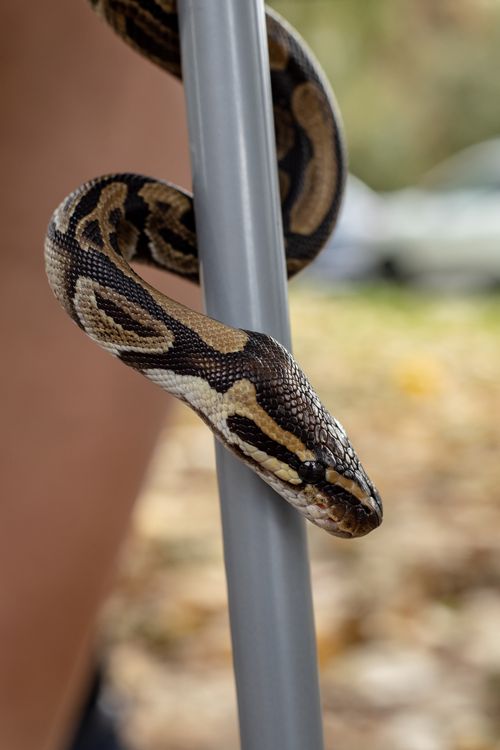
The ball python has long reigned as the undisputed king of beginner snakes, and for good reason. Named for their defensive behavior of rolling into a tight ball with their head tucked safely inside, these gentle African serpents have introduced millions of people to the joys of snake ownership. Their manageable size, docile temperament, and relatively simple care requirements make them ideal candidates for first-time reptile keepers, while the mind-boggling variety of color morphs available ensures that even experienced keepers can find specimens that fascinate them.
Native to the grasslands and open forests of West and Central Africa, ball pythons earned their alternative name—”royal python”—from historical accounts suggesting Egyptian royalty wore these snakes as jewelry, though this was likely an exaggeration. In the wild, they spend most of their time hidden in burrows or under vegetation, emerging primarily at dawn and dusk to hunt small mammals and occasional birds. This secretive lifestyle translates to relatively modest activity levels in captivity, making them ideal for owners who want to observe interesting behavior without constant handling.
Longevity Champions
Ball pythons are remarkably long-lived creatures, with well-documented specimens exceeding 40 years of age. Some estimates suggest maximum lifespans of 50+ years with exceptional care. This longevity represents both a commitment and an opportunity—ball pythons can truly become multi-generational family pets. Anyone acquiring a ball python should understand that they are making a decades-long commitment to an animal whose needs may evolve as both they and veterinary medicine advance over the years.
The explosion of ball python popularity in recent decades stems largely from the reptile pet industry’s development of increasingly exotic color mutations. What began with simple pattern variations has evolved into an entire genetic hobby, with morphs named after their creators or visual effects. There are now hundreds of documented morph combinations, ranging from the classic wild-type brown and gold to albinos lacking all melanin, piebalds with large patches of white, and strange combinations like the “spider” morph with web-like patterns and the controversial “woma” python genetics. A single genetically valuable ball python can sell for tens of thousands of dollars, while common morphs remain affordable starter pets.
Housing Requirements
Housing ball pythons requires understanding their natural behaviors. Adults need enclosures of at least 40 gallons (approximately 36″ x 18″), with larger being better. These are terrestrial snakes that appreciate floor space more than height, though some climbing opportunities should be provided. The enclosure must include secure hides—one on the warm end and one on the cool end—allowing the snake to feel secure while maintaining thermal options. Open hides or hides that allow light through cause stress. The warm side should maintain 88-92°F using under-tank heating, while the cool side stays around 78-82°F.
The thermal gradient is essential for ball python health and digestion. Without proper temperatures, ball pythons cannot properly digest their meals, leading to regurgitation and associated health problems. Reliable thermometers on both ends of the enclosure allow monitoring of these critical temperatures.
Quick Facts
- Lifespan: 20-30+ years, sometimes exceeding 40 years
- Size: 3-5 feet (females larger than males)
- Diet: Carnivorous (mice, rats in captivity)
- Activity: Crepuscular/nocturnal
- Temperament: Generally docile and tolerant of handling
The Feeding Refusal Problem
Feeding presents the most common source of anxiety for new ball python owners. These snakes have earned an unwarranted reputation for being “picky eaters,” though the reality is more nuanced. In the wild, ball pythons experience seasonal feeding patterns, sometimes refusing food for weeks or months during breeding season or cooler periods. Captive ball pythons often demonstrate similar tendencies, particularly during autumn and winter. This fasting behavior, while alarming to new owners, is completely normal as long as the snake maintains healthy weight and body condition.
When ball pythons refuse food, the most important response is patience. Aggressive intervention—force feeding, switching prey types repeatedly, or excessive handling—typically worsens the situation by stressing the snake. Documenting weight trends with a kitchen scale provides objective data; as long as weight remains stable or only declines slightly over multiple missed meals, intervention is rarely necessary. Only snakes showing significant weight loss or other symptoms of illness warrant veterinary attention for feeding assistance.
The feeding response typically improves with consistent husbandry and time. Offering appropriately sized prey (roughly the same diameter as the snake’s thickest body section) every 7-14 days for adults usually suffices. Many owners switch between mice and rats of various sizes depending on the snake’s appetite and body condition. Frozen-thawed prey is strongly preferred over live feeding for safety reasons—live rodents can seriously injure or kill snakes, particularly during extended strikes or when the snake is not hungry.
Shedding and Health
Ball pythons shed their skin periodically throughout their lives, and the quality of sheds indicates overall health and husbandry quality. Complete, intact sheds that come off in one piece suggest proper hydration and humidity. Piecemeal sheds or retained eye caps (the protective brille covering the eyes) indicate problems requiring adjustment. A humidity gauge and proper misting or fogging routines address most shedding issues.
Ball pythons have specific humidity requirements (50-60% minimum, rising to 70% during shedding). Inadequate humidity causes incomplete sheds, retained eye caps, and respiratory infections. Always provide a humidity hide—a sealed container with damp moss—during shedding periods.
Handling and Temperament
One of the ball python’s greatest advantages is its tolerance for handling. Unlike many reptiles that stress easily from human contact, ball pythons often seem comfortable in human company. They rarely bite, and even defensive strikes result from hunger confusion rather than aggression. Proper handling technique involves supporting the body from below rather than grabbing from above, which mimics predator attacks and causes stress.
Most ball pythons learn to recognize their owners’ voices and scents, becoming calm during handling sessions with familiar people. This tameness develops over time with consistent, gentle interaction, rewarding owners who invest patience in building trust with their snakes.
Health Considerations
With proper care, ball pythons are relatively hardy creatures. Common health issues include respiratory infections from inadequate temperatures or humidity, mite infestations, and咬合 problems from improper feeding techniques. Annual veterinary checkups with reptile-experienced veterinarians help catch problems early.
***For those considering their first snake, the ball python remains the gold standard recommendation. Their manageable size, calm disposition, and fascinating appearance create an ideal introduction to serpents. While prospective owners should understand the decades-long commitment and specific care requirements, the rewards of ball python ownership—watching them explore, observing successful feeds, and developing trust through patient handling—prove deeply satisfying. These coiled companions offer something genuinely unique in the pet world: the opportunity to build a relationship with one of nature’s most elegant and efficient predators.
Hope you enjoy your Ball Python!