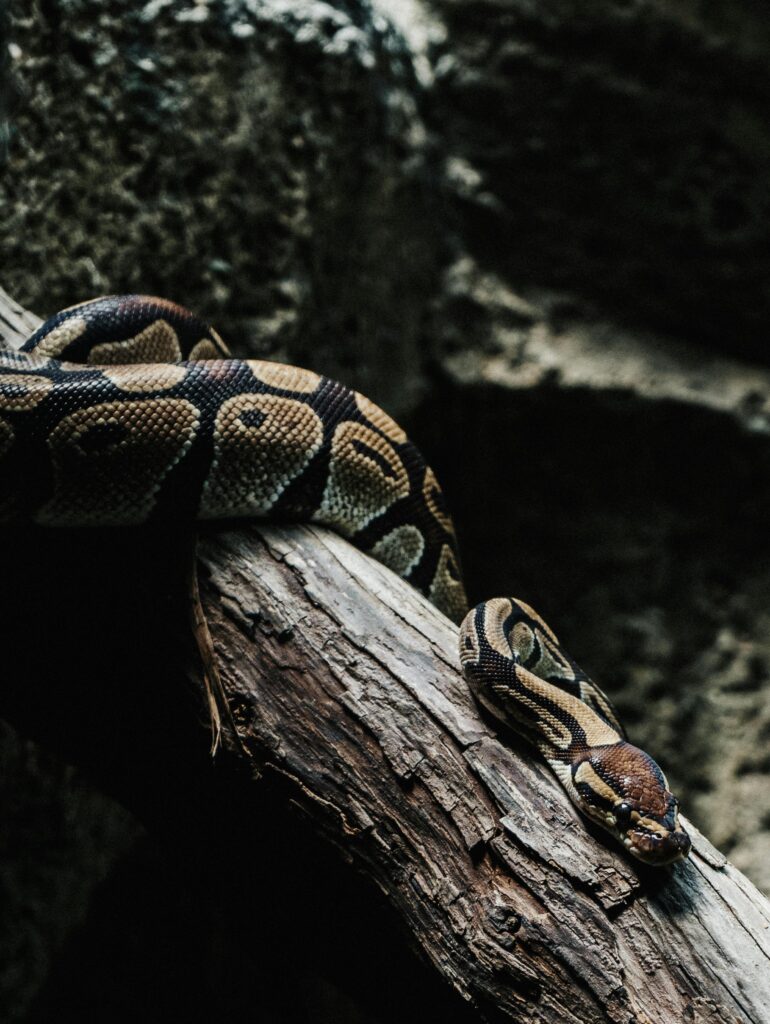
# 10 Mistakes Ball Python Owners Make (And How to Fix Them)
Ball pythons (*Python regius*) are one of the most rewarding reptiles you can keep — calm temperament, manageable size, gorgeous patterns. They’re also among the most commonly mishoused snakes in captivity.
Why? Because they’re fossorial (burrowing) by nature, secretive, and surprisingly sensitive to their environment. A corn snake will tolerate a mediocre setup. A ball python will refuse to eat for six months, develop respiratory infections, or slowly decline without anyone noticing until it’s serious.
Here’s the rundown of the 10 mistakes ball python keepers make most often — and how to fix them properly.
—
## Mistake #1: Enclosure Too Small
This is the single most common beginner mistake.
Pet stores frequently sell ball pythons in 10-gallon tanks with the recommendation that “they only grow as big as their enclosure.” This is biologically false. An adult ball python needs a minimum floor space of approximately **4x2x2 feet (120 gallons)** — and females over 4 feet genuinely benefit from larger.
**Why size matters:** Ball pythons thermoregulate by moving between warm and cool zones. A small enclosure makes this impossible. They also feel exposed and stressed in open spaces without adequate clutter — a bare 20-gallon tank is the snake equivalent of living in a white hallway.
**The fix:** Buy the right-sized enclosure from day one. A 4x2x2 PVC enclosure will house an adult ball python for its entire life. Starting with a 40-gallon tank as a juvenile is fine, but plan the upgrade before your snake outgrows it.
—
## Mistake #2: No Temperature Gradient
Ball pythons are exothermic — they need to move between temperature zones to regulate their body heat. Many owners set up a single heat source on one end and assume the whole tank is “warm.”
**Proper ball python temperatures:**
– **Hot side (basking/warm side):** 88–92°F (31–33°C)
– **Cool side:** 76–80°F (24–27°C)
– **Nighttime (cool side):** Can drop to 72–75°F
If your entire enclosure is the same temperature, your snake cannot thermoregulate. This suppresses immune function, slows digestion, and leads to lethargy.
**The fix:** Use at minimum two thermometers — one on each end of the tank. Pair heat sources with a **thermostat** (more on this in Mistake #6) to prevent dangerous overheating.
—
## Mistake #3: Humidity Always Too Low
Ball pythons come from West and Central Africa, where humidity routinely sits between **60–80%**. In a typical heated reptile enclosure in an air-conditioned home, humidity can drop to 30–40% within hours.
**What happens when humidity is too low:**
– Stuck shed (retained eye caps, tail tip stuck shed)
– Dehydration
– Cracked scales
– Respiratory irritation
– Inability to properly thermoregulate through the skin
**The fix:** Maintain **60–70% humidity** consistently. Increase to 70–80% during shed. Use a digital hygrometer on the cool side to monitor it. Increase humidity with larger water bowls, damp sphagnum moss in a humid hide, reduced ventilation, or misting — and always address ventilation before increasing water bowl size.
—
## Mistake #4: Unsafe Substrates
This one kills ball pythons.
Substrates to **never use** in a ball python enclosure:
– **Pine and cedar shavings** — The aromatic oils (phenols) are toxic to reptiles. They cause chronic respiratory irritation and can be lethal over time, even with “just a little.”
– **Sand** — Does not hold humidity, causes impaction if accidentally ingested during feeding, and harbors bacteria.
– **Walnut shells** — Sharp edges can abrade skin and digestive tracts; high impaction risk.
– **Gravel or small pebbles** — Same impaction risk as sand.
**The fix:** Safe substrate options include:
– **Coconut fiber (coco coir)** — Excellent humidity retention, soft, naturalistic
– **Cypress mulch** — Holds humidity well, looks natural, easy to spot-clean
– **Paper towels or newspaper** — Perfect for quarantine/treatment enclosures, not ideal long-term
– **Loose bioactive mix** — Viable for experienced keepers with established cleanup crews
For most ball python keepers, a 2–4 inch layer of coconut fiber or cypress mulch is the best everyday choice.
—
## Mistake #5: Improper Feeding
Ball pythons are ambush predators that can go months without eating in the wild. In captivity, this instinct gets new owners into trouble.
**Common feeding mistakes:**
**Wrong prey size:** Offering prey that’s too large causes stress and potential regurgitation. Offering prey that’s too small provides inadequate nutrition. The correct size is prey roughly equal to the snake’s mid-body girth, or 10–15% of the snake’s body weight.
**Leaving live prey unattended:** This should never happen. An unattended live rodent can seriously injure or kill a ball python — bites to the eyes, spine, and jaw are common. If you feed live, supervise constantly and remove the prey if not eaten within 30–45 minutes.
**Feeding inside the enclosure:** Many keepers feed in a separate “feeding tub” to prevent substrate ingestion and reduce aggression. This is debated, but regurgitation linked to handling after feeding is a real concern.
**Inconsistent schedule:** Hatchlings may eat weekly. Adults often eat every 2–4 weeks. Once you’ve established a working schedule, don’t constantly change it.
**The fix:** Feed appropriately-sized frozen/thawed rodents. Never leave live prey unsupervised. Establish a consistent feeding schedule and stick to it. If your ball python refuses a meal, don’t panic — note the attempt and try again in 7–14 days.
—
## Mistake #6: Heat Sources Without Thermostats
This is the most dangerous mistake on this list.
Heat rocks, heat lamps, and under-tank heaters without thermostats are the most common cause of **thermal burns** in ball pythons.
Here’s why: A heat rock can surface at 100°F — comfortable on one side — while the internal heating element runs at 130°F or higher in a small area. A ball python coiled on a heat rock can sustain serious burns over hours of sleep without moving. According to PetMD, **basking “hot rocks” are among the most dangerous heating methods and the most common cause of burns in reptiles**.
**Symptoms of thermal burns:**
– Discolored, brownish scales on the belly
– Blistering or raised scale surfaces
– Swelling
– Reluctance to move or coil in that area
Burns can become infected and lead to septicemia — a systemic infection that can be fatal.
**The fix:** **Always use a thermostat** with any heat source. A digital proportional thermostat for heat mats or a dimming thermostat for heat lamps is non-negotiable. Set the thermostat to your target temperature, not “maximum.”
Recommended heat sources: Under-tank heaters (UTH) on a thermostat, radiant heat panels (RHP), or deep heat projectors (DHP) — all with proper thermostat control.
—
## Mistake #7: Cohabitation — Putting Two Ball Pythons Together
Ball pythons are strictly solitary. In the wild, they spend almost all their time in isolation. Putting two ball pythons in the same enclosure creates chronic stress, competition for heat resources, aggressive dominant behavior, and disease transmission.
**What can go wrong with cohabitation:**
– One snake becomes dominant, outcompeting the other for heat and food
– Feeding aggression — one snake eats the other (yes, it happens)
– Spread of mites, scale rot, and infectious diseases
– Both snakes refusing food due to stress
– Incompatible shed cycles causing humidity conflicts
**Rare cases of successful cohabitation** exist, typically among experienced keepers with very large enclosures and careful monitoring. For 99% of ball python owners — beginners and experienced alike — housing two ball pythons together is unnecessary risk.
**The fix:** One snake per enclosure. Simple.
—
## Mistake #8: Inadequate Hides
Ball pythons are burrowers and crevice-dwellers. They feel exposed and stressed without snug, enclosed hiding spaces.
**What a proper hide looks like:**
– One entrance that’s just large enough for the snake to pass through
– Tall enough for the snake to coil inside with the top of the hide touching the snake’s back
– Closed on all sides (top, bottom, both ends) — not an open dish or a flat hide
– Dark interior
A hide that’s too large, too open, or placed incorrectly is as bad as no hide at all.
**You need at minimum two hides:**
– One on the warm side
– One on the cool side
The snake should be able to thermoregulate AND feel secure simultaneously. Without adequate hides, ball pythons often refuse to eat, spend excessive time in the water dish, or display signs of chronic stress.
**The fix:** Buy properly-sized commercial hides or make them from PVC elbows, terra cotta pots, or small cardboard boxes. Replace as your snake grows.
—
## Mistake #9: Handling Too Soon After Eating or During Shed
Ball pythons are not social animals. They tolerate handling, but they need time to digest.
**After eating:** Wait **48 hours** before handling. Digestion requires elevated metabolism and a stable body temperature. Handling too soon can cause regurgitation — and each regurgitation episode weakens the snake’s digestive system.
**During shed:** Ball pythons in blue (the cloudy-eyed pre-shed phase) are functionally blind and stressed. They’re also more vulnerable to injury. Leave them alone until they’ve completed the shed. A complete shed in one piece indicates good husbandry; a shredded, retained shed indicates a problem.
**General handling:** Limit handling to 10–15 minutes at a time, 2–3 times per week. If your snake defecates during handling, that’s normal — wash your hands thoroughly before and after.
**The fix:** Create a handling schedule that respects feeding days and shed cycles. Learn to read body language — a tense, coiled ball python that’s pressing flat against the ground is stressed, not “playing dead.”
—
## Mistake #10: Ignoring Early Warning Signs
Ball pythons are masters at hiding illness. In the wild, a visibly sick snake is a target. In captivity, this instinct means symptoms are often advanced before owners notice.
**Signs that require immediate attention:**
| Symptom | Possible Cause |
|———|—————|
| Weight loss, ribby body | Parasites, inadequate feeding, illness |
| Wheezing, bubbles from mouth | Respiratory infection |
| Staying in water bowl chronically | Mites, skin infection, overheating |
| Refusing food for 2+ months (adult) | Stress, illness, incorrect husbandry |
| Discolored belly scales | Burn, infection, scale rot |
| Cloudy eyes outside of shed | Dehydration, early infection |
| Retained eye caps | Low humidity |
| Lethargy, refusing to move | Too cold, illness |
**The fix:** Weigh your ball python monthly and keep a log. This is the single most effective health monitoring tool — gradual weight loss is often the first sign of a problem. Inspect your snake at each handling. If something looks wrong, research the symptoms and correct your husbandry before assuming it’s a disease. Many “illnesses” are husbandry problems in disguise.
—
## Quick Reference: Ball Python Care Requirements
| Parameter | Target |
|———–|——–|
| Enclosure size (adult) | 4x2x2 ft minimum (120 gallons) |
| Hot side temperature | 88–92°F (31–33°C) |
| Cool side temperature | 76–80°F (24–27°C) |
| Nighttime temp (cool side) | 72–75°F |
| Humidity | 60–70% consistently |
| Feeding (adult) | Every 2–4 weeks |
| Prey size | Equal to snake’s mid-body girth |
| Hides | One warm side, one cool side, both snug |
| Substrate | Coconut fiber, cypress mulch, paper towels |
| Thermostat | Always — on every heat source |
—
## Final Thoughts
Ball pythons live **20–30 years in captivity** with proper care. That’s a serious commitment. The good news: they’re not difficult to care for. They just need specific, stable conditions — and the willingness to set things up correctly from the beginning rather than patching problems later.
Invest in the right enclosure, get your temperature gradient and humidity dialed in, buy proper hides, always use thermostats, and respect the snake’s solitude.
Do that, and you’ll have decades of calm, beautiful, low-maintenance companionship.