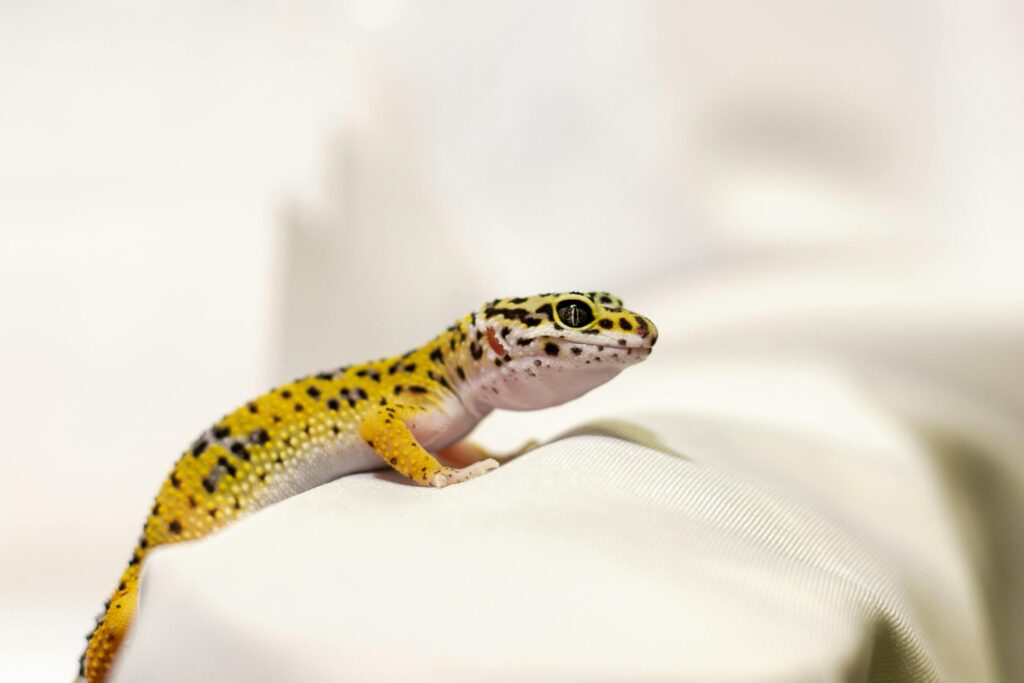
Leopard geckos are one of the most popular pet reptiles in the world, and for good reason. They are docile, low-maintenance, and come in an incredible range of colours called morphs. Whether you are bringing home your first leopard gecko or doing research beforehand, this leopard gecko care guide covers everything you need to give your pet a long and healthy life.

Why Leopard Geckos Make Great Pets

Leopard geckos originate from the rocky, dry grassland and desert regions of Afghanistan, Pakistan, and India. Unlike many reptiles, they are ground-dwelling and crepuscular — most active at dawn and dusk. They grow to 7–10 inches and can live 15–20 years with proper care, making them a serious long-term commitment.

Their calm temperament makes them easy to handle. Most leopard geckos tolerate daily interaction well. Unlike tree-dwelling geckos, they do not have sticky toe pads that can tear skin — they have small, soft claws instead, which makes them much safer for beginners to handle.

Enclosure and Housing for Leopard Geckos

A single adult leopard gecko should be housed in a minimum 20-gallon tank. The ideal enclosure size is a 40-gallon breeder tank, which gives your gecko plenty of room to explore and thermoregulate effectively.

Never house multiple leopard geckos together. They are solitary animals and can become aggressive toward one another, especially males. Even seemingly calm co-habitation can result in stress, injuries, and resource competition.

Substrate and Leopard Gecko Hides

The substrate you choose matters more than most beginners realise. Avoid calcium sand, walnut shells, and loose substrate at all costs — these can cause impaction if accidentally ingested and are one of the leading causes of health problems in leopard geckos.

The best substrates for leopard geckos are paper towels, reptile carpet, or slate tile. These are easy to clean, safe, and completely digestible if your gecko accidentally eats some during feeding.

You will need three hides: a warm hide on the hot side (88–92°F), a cool hide on the cold side (75–80°F), and a humid hide filled with sphagnum moss to help with shedding. Place the humid hide in the middle of the tank so it sits at an intermediate temperature.

Temperature and Lighting Requirements

Leopard geckos are ectothermic, meaning they rely on their environment to regulate body temperature. You must create a thermal gradient across the tank with a warm side and a cool side.

The warm side of the tank should be 88–92°F during the day. At night, temperatures can drop to 75°F without issue. The cool side should stay between 75–80°F at all times.

Use an under-tank heater connected to a quality thermostat — never use hot rocks. Hot rocks create uneven, dangerous heat that can cause severe burns to your leopard gecko's belly. A ceramic heat emitter can be used at night to maintain temperatures without light.

UVB lighting is not strictly required but is highly recommended. A low-output UVB bulb (2–5%) helps your leopard gecko metabolise calcium properly and contributes to overall health. Even indirect UVB exposure has been shown to benefit crepuscular reptiles.

What Do Leopard Geckos Eat? Diet and Feeding

Leopard geckos are insectivores, which means their diet consists entirely of live insects. The best feeder insects for leopard geckos include gut-loaded crickets, mealworms, dubia roaches, and black soldier fly larvae.

Feed juveniles every day and adults every 2–3 days. A good rule of thumb is to offer 2 appropriately-sized insects per gram of your gecko's body weight per feeding. Always gut-load feeder insects 24 hours before offering them to your gecko.

Dust feeder insects with a calcium supplement at every feeding and a vitamin D3 supplement twice a week. Without proper supplementation, leopard geckos are at high risk of developing metabolic bone disease, which is a serious and often fatal condition.

Avoid feeding pinky mice to adult leopard geckos unless recommended by a vet. Stick to appropriately-sized insects as the primary food source.

Humidity and Shedding

One of the most important parts of leopard gecko care is humidity management. Keep the tank humidity between 30–40%. Too much humidity leads to respiratory infections, while too little causes dysecdysis — the technical term for problematic shedding.

The humid hide is the most critical humidity tool. Check the sphagnum moss daily and mist it lightly if it dries out. When your gecko is about to shed, its colour will appear dull and pale. A healthy gecko sheds in one complete piece. If you notice retained shed on the toes or around the eyes, increase humidity in the humid hide and contact a reptile veterinarian.

Leopard Gecko Health: Warning Signs to Watch For

A healthy leopard gecko has clear, bright eyes, a plump and rounded tail, and an alert disposition during feeding time. Watch out for these common warning signs:

Weight loss or an increasingly thin tail is one of the earliest indicators that something is wrong. Mucus or discharge from the eyes, nose, or mouth is a sign of respiratory infection. Lethargy, refusing food for more than two weeks, and irregular droppings are all reasons to consult a vet.

Any bloating, swelling, or difficulty moving should be treated as urgent. Leopard geckos are skilled at hiding illness, so any behavioural change is worth investigating.

Handling and Temperament

Let your new leopard gecko settle into its enclosure for 1–2 weeks before handling. When you do start handling, always support the body from underneath with both hands and avoid sudden movements.

Never grab your leopard gecko by the tail. Like many lizards, they can drop their tail as a defence mechanism. While the tail will regenerate, the process is stressful and takes significant energy. Keep handling sessions to 10–15 minutes maximum.

Leopard Gecko Care Summary

Leopard gecko care is straightforward, but it requires consistency. Provide a properly sized enclosure with three hides, maintain a thermal gradient of 88–92°F on the warm side, feed a varied diet of gut-loaded insects with calcium supplementation, and keep humidity in the 30–40% range.

With these basics in place, leopard geckos are among the most rewarding reptiles you can keep. They are forgiving of beginner mistakes, fascinating to observe, and capable of living decades as a cherished pet.