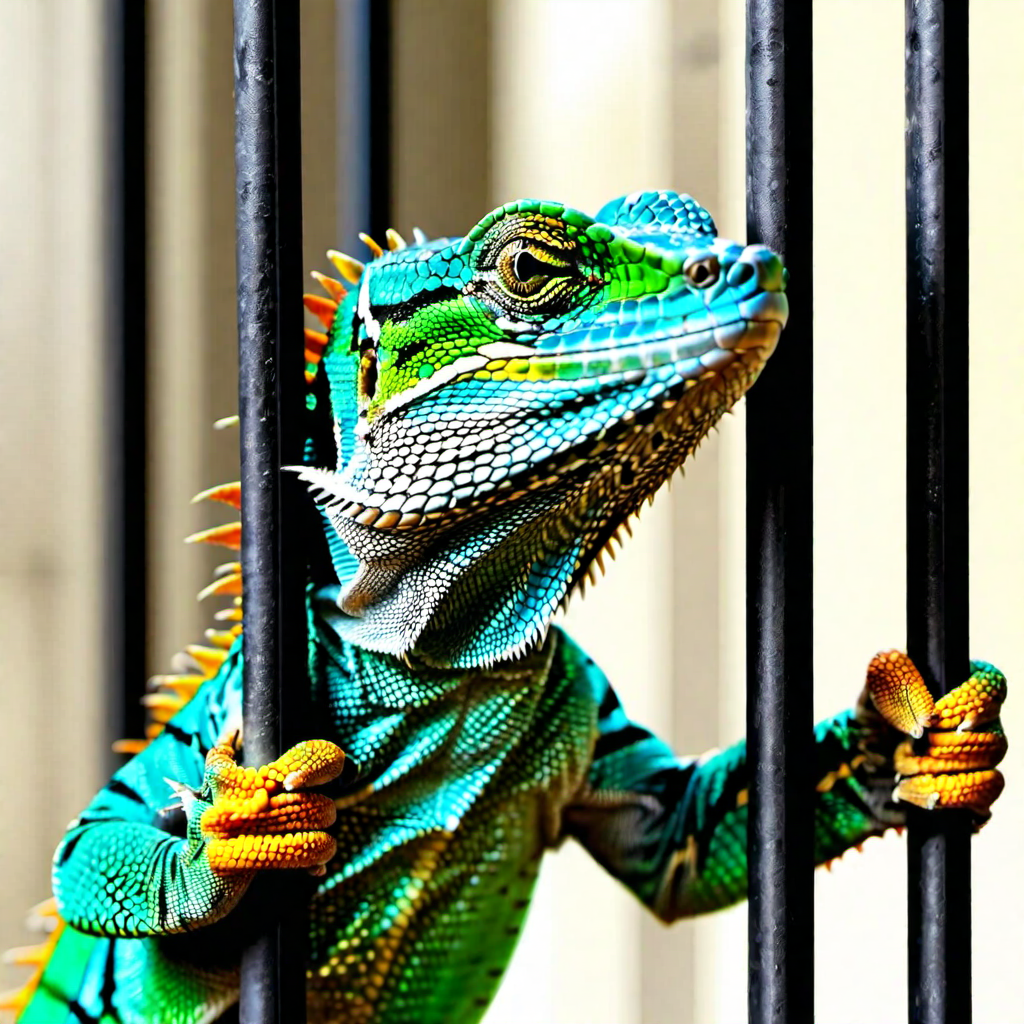
Illegal Pets: The Uncomfortable Truth Most Pet Stores Won’t Tell You
You fell in love with a sugar glider at a reptile expo. Or maybe you watched a YouTube video of someone bonding with a baby kangaroo and thought I need that. Before you start shopping around, here’s something you need to hear: that adorable exotic pet could make you a criminal — depending on where you live.
Exotic pet laws in the United States are a patchwork quilt of contradictions. A ferret is perfectly legal in one county and a felony offense in the one next door. A tiger cub might require nothing more than a permit in Texas — but get caught with one in California and you’re looking at serious jail time. The rules shift not just from state to state, but often from city to city.
This isn’t scare tactics. This is the reality of America’s deeply fractured approach to exotic animal ownership.
🗺️ States With the Toughest Bans
🚫 California — The Strictest in the Nation
California is arguably the hardest state for exotic pet lovers. The state has some of the most comprehensive bans on wild and exotic animals in the country.
Completely illegal without special permit:
- Hedgehogs (yes, really)
- All rodents except hamsters and lab-raised rats
- Non-domesticated rabbits
- Most wildlife species
If you grew up thinking a “exotic pet” meant a fancy parrot, California’s version of reality might be a shock.
🚫 Pennsylvania — Nearly Impossible Permits
Pennsylvania bans most exotic animals outright. While three permit types technically exist, applicants must demonstrate two years of hands-on experience — making permits “practically impossible to get” according to wildlife law trackers.
🚫 Massachusetts — Wild Animals as Pets = Criminal
Massachusetts has an explicit law against keeping wild animals as pets. The state does offer 11 types of special permits for select individuals, but for the average person? No luck.
🚫 Hawaii — Not What You’d Expect
Hawaii has an extremely limited list. Without a special permit for scientific or medical reasons, you can only legally own: cats, dogs, cattle, goats, sheep, swine, alpacas, and llamas. That’s it. Think twice before trying to import anything else from the mainland.
🦁 The “Wow, That’s Illegal?!” Animals
Here’s where it gets interesting. Some of the most commonly banned exotic pets might surprise you:
Sugar Gliders
These tiny marsupials are beloved by fans of exotic pets — but good luck owning one legally in several states.
| ❌ States where banned: | Connecticut, Georgia, New York, Pennsylvania |
| AKA Legal with permit in: | Vermont, Rhode Island |
Hedgehogs
Despite being sold at pet stores across the country, hedgehogs are illegal in:
- California (strict ban)
- Connecticut
- Pennsylvania
- Georgia
- New York
They’re classified as illegal wildlife in these states due to concerns about escape, hybridization with wild species, and potential as an invasive species.
Ferrets
Ferrets are the classic example of a pet that’s legal in most places but deeply controversial. They’re banned outright in:
- California (illegal since 1934!)
- Hawaii
In most other states, they fall into a gray area — technically permitted but often restricted at the city or county level.
Primates (Monkeys & Apes)
Nonhuman primates like marmosets, capuchins, and the ever-popular (but notoriously difficult) chimp are banned in a shocking number of states:
California, Connecticut, Georgia, Illinois, Missouri, New York, New Mexico, Ohio, Oregon, Pennsylvania, South Dakota, Tennessee, Washington
The reason? Primates can carry diseases like herpes B, require complex social structures, and can become aggressive and dangerous as they mature.
Large Cats (Lions, Tigers, Leopards)
Here’s a stat that puts it in perspective: bears and large cats are banned in 20+ states. You might be surprised to find that owning a lion isn’t necessarily harder than owning a dog in states like Nevada or Texas (with permits). But try that in New York or Illinois and you’re looking at felony charges.
🐊 The Invasive Species Problem — Florida’s Hard Line
Florida faces a unique problem: invasive species that escaped or were released have become an ecological nightmare. The state takes this so seriously they’ve banned some of the most common exotic pets nationwide:
Florida explicitly bans:
- Burmese pythons
- Reticulated pythons
- Green anacondas
- Nile monitors
- Green iguanas (yes, the ones sold at every reptile store)
- Tegu lizards
This is why you’ll see Florida reptile owners talk about “Florida-specific” morphs and species — some animals that are perfectly legal to breed and sell in other states can’t even be possessed in Florida without special permits.
⚖️ Why Do These Laws Exist?
Understanding the reasoning helps, even when the rules feel frustrating:
1. Public Safety
Lions, tigers, and primates kill and injure people every year. A 200-pound big cat or a chimp with unpredictable aggression isn’t the same as a dog, no matter how well-trained.
2. Invasive Species & Ecological Damage
Burmese pythons have established breeding populations in the Florida Everglades, devastating native wildlife. Iguana populations in South Florida have become a genuine nuisance. One person’s released pet can become everyone’s problem.
3. Animal Welfare
Exotic animals have complex needs — dietary, social, spatial — that most owners can’t meet. Many exotic pet owners surrender their animals within two years, and sanctuaries are overwhelmed.
4. Zoonotic Disease Risk
Primates carry Herpes B. rodents can transmit diseases to humans and native wildlife. The CDC and USDA take these risks seriously.
✅ The “Legal in Most Places” Pets (If You’re Looking for Options)
If you’re set on something beyond a dog or cat, these tend to be more widely accepted — but always, always check your local city ordinances:
- Ball pythons (non-venomous, generally legal)
- Leopard geckos
- Bearded dragons
- Chinchillas (legal in most states, banned in… a few)
- Domestic rabbits (not wild rabbits — those are illegal in many states)
- Fennec foxes (banned in some states, permitted in others)
- Alpacas & llamas (surprisingly legal in most places!)
- Chinchillas are legal in all states *Maine New Hampshire and New Jersey need a permit.
The Bottom Line
America’s exotic pet laws are messy, contradictory, and frequently changing. What you can legally own in one zip code might land you in prison one county over. Before you bring home that sugar glider, fennec fox, or — frankly — anything with scales or claws that isn’t a dog or cat, do your homework thoroughly.
The animal deserves it. And so do you.
⚠️ Disclaimer: This article reflects laws as of early 2026. Exotic pet laws change frequently. Always verify current regulations with your state’s Fish & Wildlife Department before acquiring any exotic animal.
https://www.findlaw.com/injury/torts-and-personal-injuries/exotic-animal-laws-by-state.html